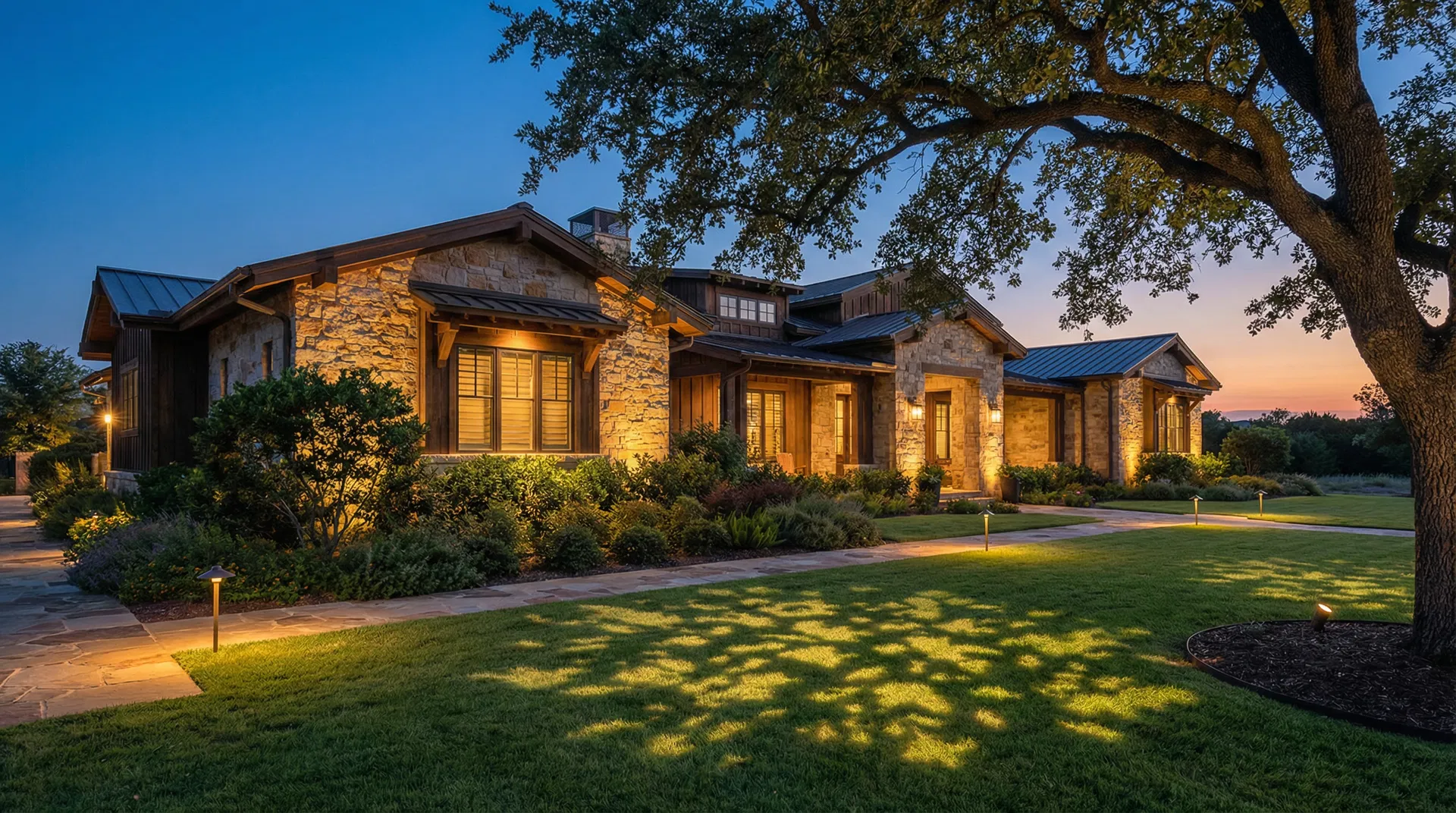
Architectural Lighting & House Uplighting in Norman & OKC
We design exterior lighting systems that reveal the character of your home after dark. Uplighting, wall washing, soffit lighting, and accent techniques — all hidden fixtures, all dramatic results.
Make Your Home the Best-Looking Property on the Street
Architectural lighting transforms the exterior of your home from a dark silhouette into a nighttime showpiece. Using a combination of uplighting, wall washing, and accent techniques, we highlight the features that make your home unique — stone facades, columns, arched entryways, gable peaks, and textured walls.
The key to great architectural lighting is restraint. We don't flood your home with light — we sculpt it. Each fixture is positioned to create depth, shadow, and dimension. The result is a home that looks warm, inviting, and architecturally significant, even from the street.
In Oklahoma's premium neighborhoods — Nichols Hills, Edmond's Deer Creek and Oak Tree areas, Norman's Historic District — architectural lighting has become an expected feature of well-maintained properties. It's one of the most visible and cost-effective exterior improvements you can make.
Architectural Lighting Techniques
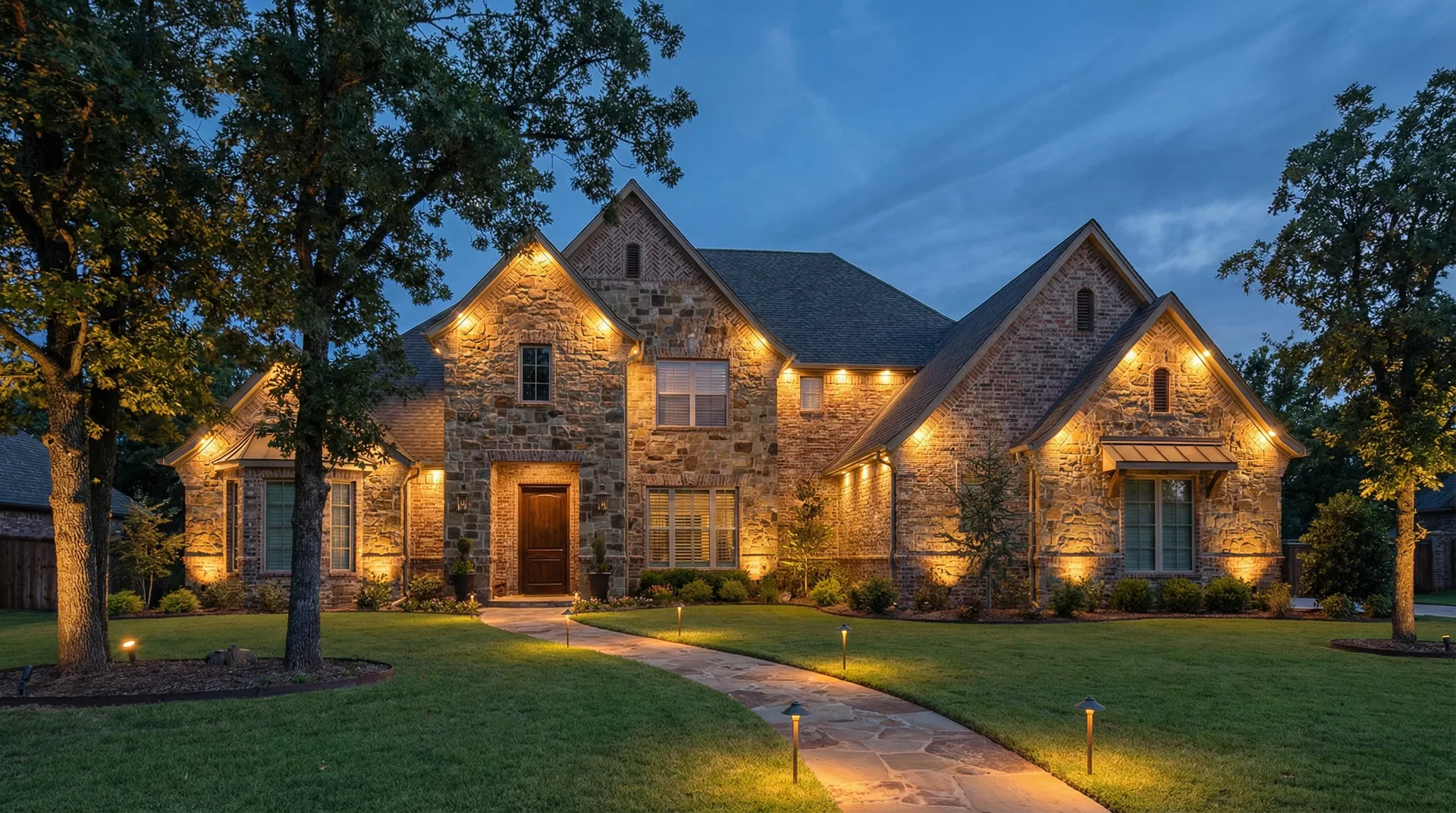
We combine multiple techniques on every project to create a layered, dimensional look that reveals your home's architecture.
Facade Uplighting
Ground-mounted fixtures aimed upward along the front of your home. This is the foundation of most architectural lighting designs — it reveals texture, creates height, and establishes the overall nighttime character of the property.
Wall Washing
Wide-beam fixtures that bathe large wall surfaces in even, uniform light. Ideal for flat stucco, painted surfaces, or large stone walls where you want a clean, gallery-like effect rather than dramatic shadows.
Accent & Spot Lighting
Narrow-beam fixtures focused on specific architectural details — a keystone above the front door, a decorative column capital, or an arched window. These create focal points that draw the eye and add visual interest.
Soffit & Eave Lighting
Recessed or surface-mounted fixtures installed under eaves and soffits to create a soft downward glow. This technique adds warmth to covered porches, entryways, and outdoor living areas without visible hardware.
Grazing
Fixtures placed very close to a textured wall surface — stone, brick, or wood — to emphasize the material's natural texture. The light rakes across the surface at a steep angle, creating dramatic shadows in every joint and crevice.
Security Integration
Architectural lighting doubles as a security deterrent. A well-lit home is far less attractive to intruders than a dark one. We design systems that provide both aesthetic beauty and practical safety without the harsh look of floodlights.
Architectural Lighting Projects
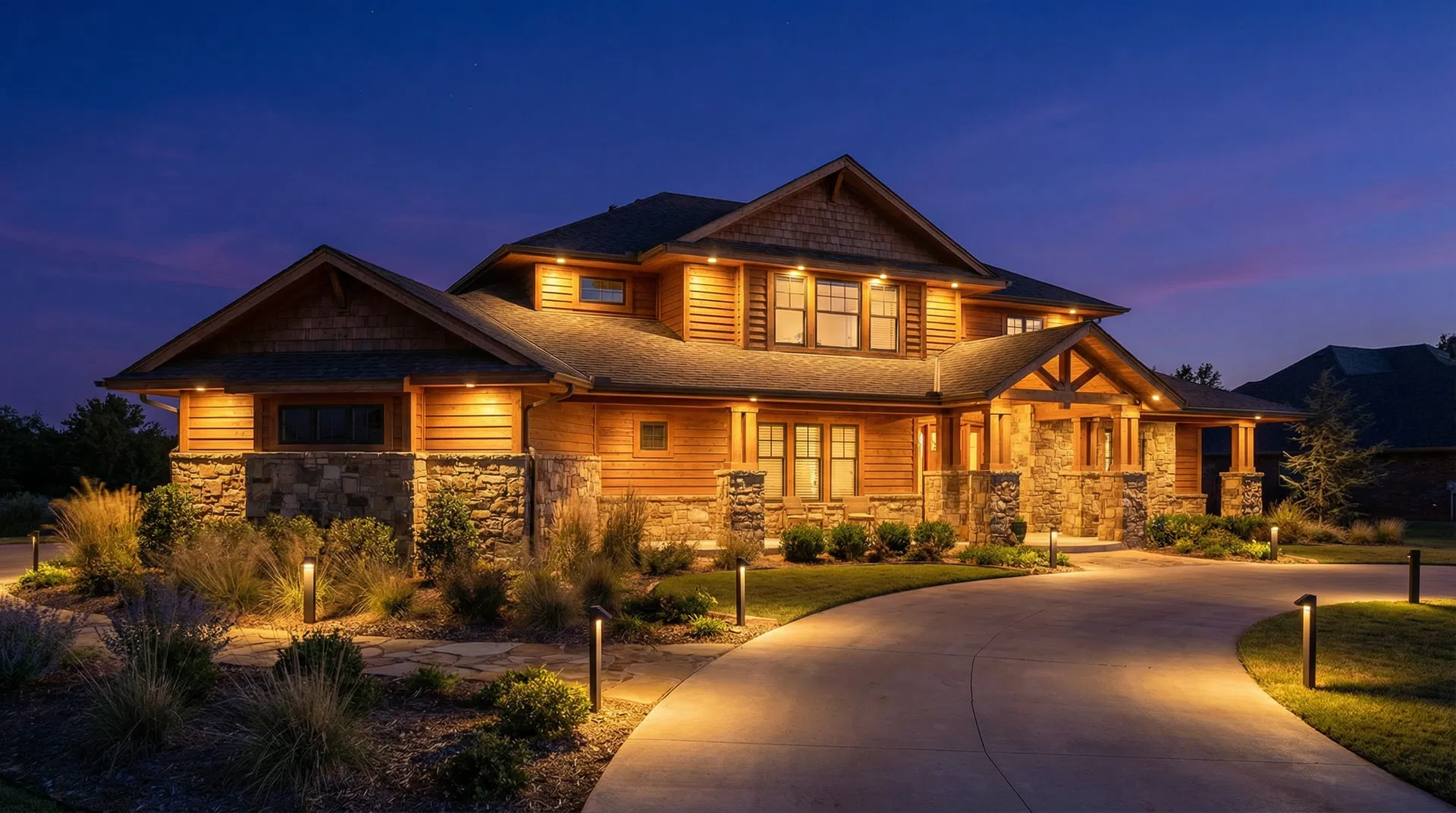
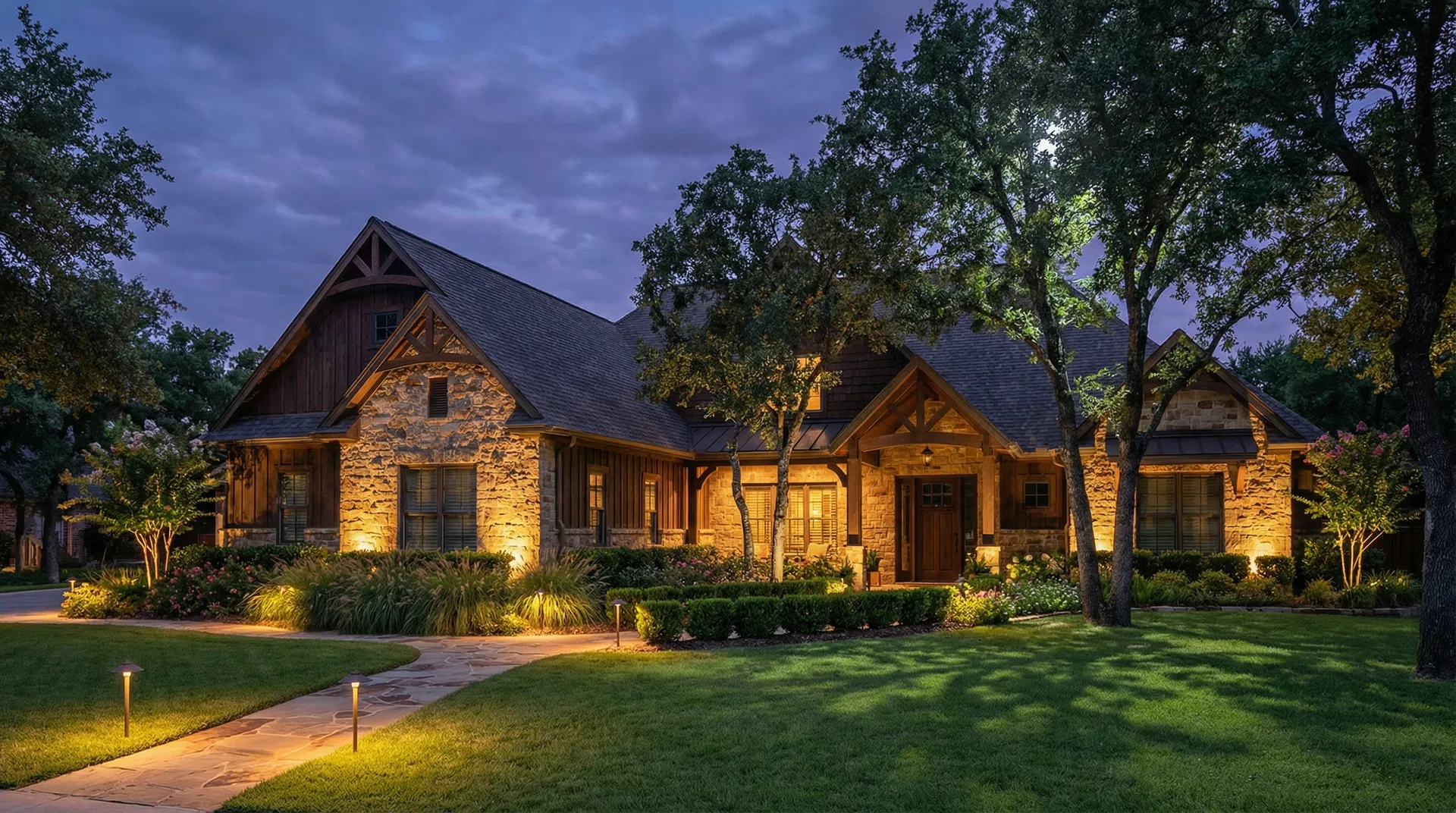
Homes across Norman, Oklahoma City, Edmond, and Nichols Hills transformed with professional architectural lighting.
Architectural Lighting Questions
What is architectural lighting?
Architectural lighting is the practice of using carefully positioned fixtures to illuminate the exterior of a building — its walls, columns, rooflines, entryways, and other structural features. The goal is to highlight the design of your home and create a dramatic nighttime presence. It's different from landscape lighting, which focuses on trees, gardens, and pathways. Architectural lighting focuses on the building itself.
What is the difference between uplighting and wash lighting?
Uplighting uses narrow-beam fixtures placed at the base of a wall or column to cast light upward, emphasizing height and texture. Wash lighting uses wider-beam fixtures to bathe a large section of wall in even, uniform light. Most architectural lighting designs use a combination of both techniques to create depth and visual interest.
Will architectural lighting increase my home's value?
Yes. Professional exterior lighting is consistently cited by real estate professionals as one of the most cost-effective curb appeal improvements. Studies suggest it can increase a home's perceived value by 15 to 20 percent. In neighborhoods like Nichols Hills, Edmond, and Norman's Historic District, well-designed architectural lighting is increasingly expected on higher-end properties.
How much does architectural lighting cost in Oklahoma?
Architectural lighting projects in the Norman and OKC metro typically start around $3,500 for a focused front-facade design and range up to $15,000 or more for a full-perimeter system with multiple lighting techniques. The cost depends on the size of your home, the number of fixtures, and the complexity of the design. We provide detailed estimates after an on-site consultation.
Do you hide the fixtures?
Absolutely. A core principle of professional architectural lighting is that you should see the light, not the source. We bury fixtures in landscape beds, tuck them behind shrubs, mount them under eaves, and use color-matched housings so the hardware disappears. The effect should feel natural and effortless.